

I just finished watching Modern Love — the series, not for the first time, and certainly not for the last. I’ve always been this way. I used to devour the Modern Love column in The New York Times, those quiet Sunday stories about ordinary people finding extraordinary feeling in the margins of their lives. I used to write love poems. I cry at romance movies. I romanticize the perfect relationship. I always have, and I’m not sorry about it.
Because here’s what I’ve come to understand: love is where I feel most alive.

It takes so many forms, love does. It doesn’t always arrive with candlelight and declarations. The love I’ve known has come in much quieter ways and it has been, without question, the most defining force in my life.
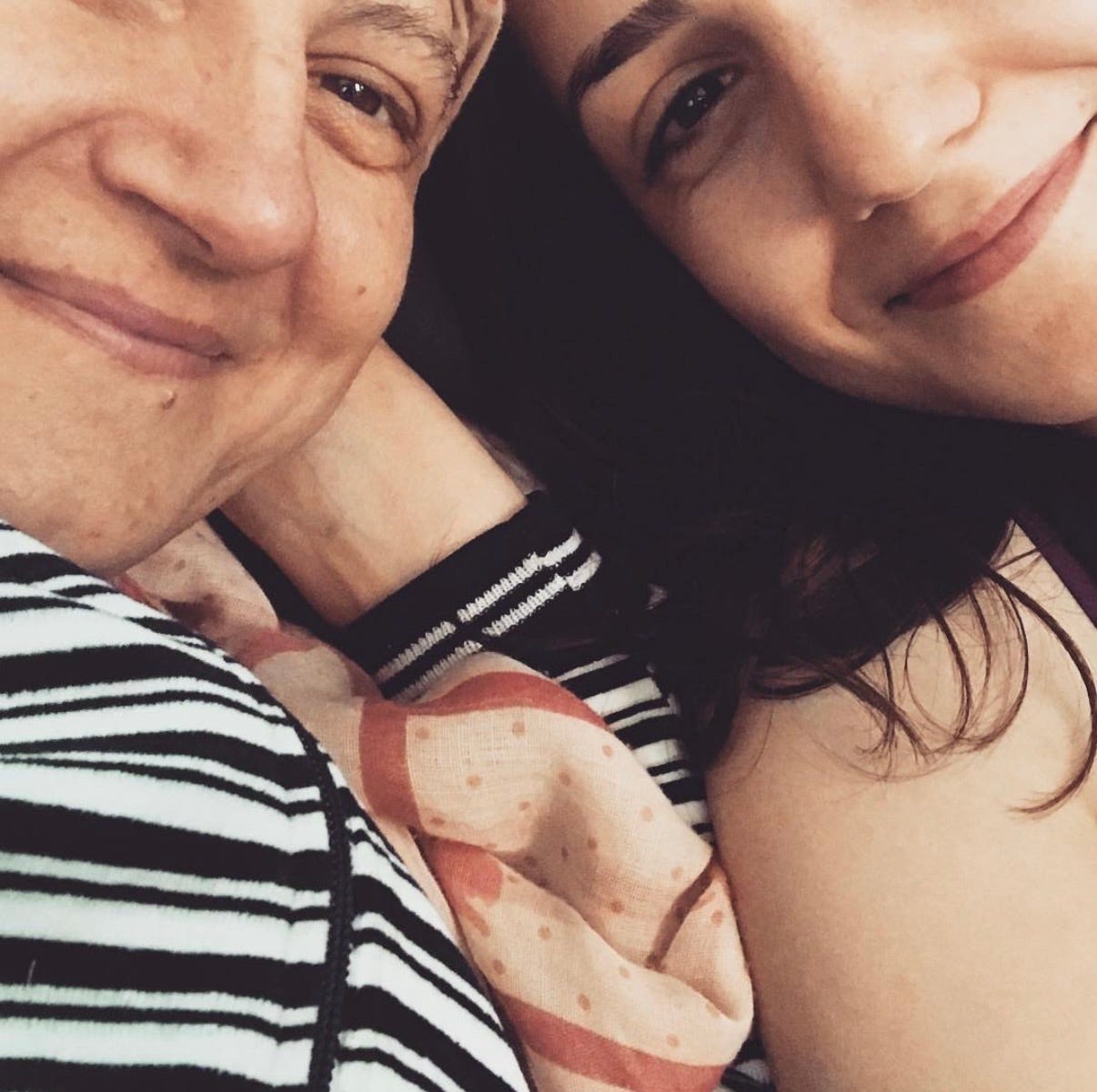
I love my mom, even though she is not here with me anymore. That love doesn’t go anywhere just because a person does. It settles in the chest, a permanent warmth that no loss can fully extinguish. As I was writing this article, I found probably the last photo I have of me and my mom. Even though it used to hurt so much to see it for many years, now I am grateful I can look at it.
I love my first boyfriend for staying beside me for more than six years, even during the stretches when I wasn’t worthy of it. That kind of loyalty - patient, unglamorous, real - deserves to be named. It deserves to be honored even though he is not in my life anymore.

I love my best friends, who stood by me through everything, every version of me, even the ones I’m not proud of. I love my family, too, even when, especially when, it’s difficult. Maybe loving through difficulty is the truest kind of love there is.

The love we carry from our past, the so-called lost love, is so often dismissed as naive. Childish, people say. But I think they’re wrong. Those early loves were the purest, most concentrated version of the feeling. We gave them everything, with no calculation, no exit strategy. That’s not immaturity. That’s courage.
Something has shifted, though, and I feel it more with every passing year.
Modern love — the real, lived, present-tense kind — has become harder. It has become something we approach like a job interview we’re terrified of failing. I catch myself doing it: composing mental briefs on men I haven’t even met yet, running silent risk assessments on first dates, cataloguing what’s missing before I’ve noticed what’s there. We’ve turned partnership into a performance review.
As we grow older, we require more certainty before we allow ourselves to feel anything at all. I have sat across from perfectly lovely men and spent the entire dinner not present, but auditing, tallying up reasons this won’t work, preemptively grieving a thing that hasn’t even started. We need to know before we’ve even held hands whether this could be the last one.
And when it isn’t, when it ends, we don’t call it life. We call it failure.
I notice it in myself, and it unsettles me.
In my twenties, I loved freely. Recklessly, maybe, but freely. Now, single and quietly terrified of ending up alone, I catch myself thinking strategically. I need a good partner. A stable one. Someone reliable. Someone who makes sense. And I wonder sometimes if I’ve grown wise or if I’ve simply grown afraid.
I don’t want to give up on the childish feeling. Or the butterflies. Or the dizzy, disorienting joy of genuinely wanting someone. But I feel the pressure to trade it in, to exchange the feeling for something safer and more sensible.
I’m not ready to do that.
There is one more thing I keep coming back to, and it has to do with butterflies.

Psychology has recently taken to telling us that butterflies are perhaps a feeling of anxiety. That the racing heart, the giddy nervousness, the way your stomach drops when someone walks into a room, it’s all just your nervous system misfiring. A trauma response. A red flag in disguise.
I don’t believe that.
Butterflies are nerves, yes. But they are the nerves of a person who is genuinely showing up for something. They are the physical sensation of putting yourself — your whole, unguarded self — on a platter for another human being and saying: here I am, I hope you’ll be careful with me. That vulnerability, that terrifying openness, is not a malfunction. It’s the whole point.
It is pure. It has always been pure.
And so I keep coming back to this: I love love. Not the curated version, not the strategic checklist version, not the version that has already accounted for every possible ending before the beginning has even begun. I love the real, uncertain, full-bodied, slightly terrifying version of it.
Even now. Especially now.
I was single for 99% of my life. After 45 years, I was in one relationship and it lasted a month. I’ve almost given up many times, but things changed last year. I finally met someone who saw me for who I was. Not the 4’9, overweight guy who had 4 kidney transplants, who has bad hips and a bad back. Who is disabled and can’t work.
She sees my kind heart. How much I care about her. How much I will listen to anything she has to say. How much I respect her. How far I’ll go for her.
We still haven’t met, but have been talking for almost 2 years.
We will finally meet this month and I know that my life will change forever. She is worth the wait. Worth all the loneliness. Worth the suffering.
You too, will find your special someone. If I can, anyone can.