
Probably one of the most common questions I’ve received in my adult life. So let me actually answer it, instead of laughing it off like I usually do. Before we dive in, I wrote this article from my Eastern European village with this amazing view, visiting my family, so please enjoy it with me.
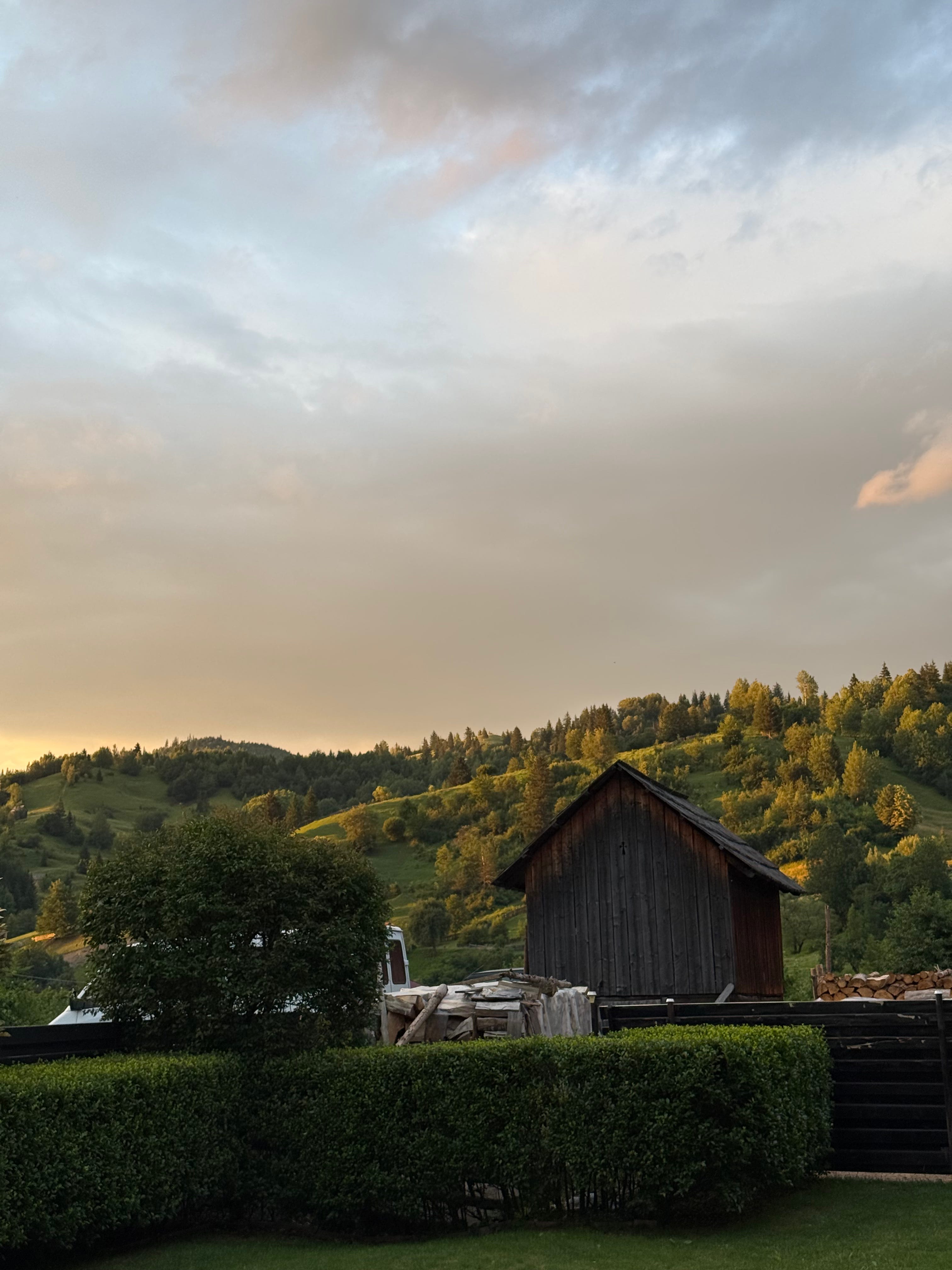
straight from my backyard
A little context first. My mom was the main provider in my family, or at least she was mine. I come from a family and honestly from a part of the world, where money was never just money. It was a subject for anger, for shame, for whispered arguments behind closed doors. If you grew up in Eastern Europe, you probably know what I mean without me having to spell it out: that low hum of financial anxiety that sits under an entire household, the sense that stability is something other people have, not something you’re entitled to. I grew up very aware of what it meant to carry debt, of failed businesses and to not know what the next day would bring. Money wasn’t an abstract concept to me. It was survival, and survival was never guaranteed.
I promised myself as a kid that I would never take a loan from a bank. That promise felt like the one solid thing I could control in a house where nothing else felt solid.
Then my mom died when I was 20.
I don’t think people who haven’t lived it understand what that actually does to you, especially at that age, especially with that background. Twenty is this strange in-between: old enough that everyone assumes you should be able to handle yourself, young enough that you still desperately need someone to catch you if you fall. I was fresh in college, I’d just moved to a different city, and suddenly the one person who had held everything together was gone. There’s a very specific kind of disorientation that comes with that: you’re grieving, but you’re also filling out forms, and figuring out rent, and realizing there is no longer a single human being on this earth whose job it is to take care of you. You become your own parent overnight, without any training for the role.
Add the Eastern European mindset on top of that, and it gets heavier. In a lot of Eastern European families, showing vulnerability isn’t really encouraged. You’re taught to push through, to not make a scene of your suffering, because everyone around you is struggling too and complaining feels like a luxury you haven’t earned. So I didn’t just lose my mother. I lost her in a cultural context that didn’t really leave room for me to fall apart afterward. I was just supposed to keep going.And I couldn’t lean on my father. Let’s just say he wasn’t a reliable source, financially or otherwise.
I had some scholarship money. Extended family sent me a little here and there, out of love, but also inconsistently, the way help often is when it’s not anyone’s actual responsibility to give it. So I existed at everyone’s mercy. I hated every second of it. There’s a particular humiliation in adulthood that comes from needing to ask, especially when you were raised to believe that needing anything from anyone was a weakness.
My first job paid me the equivalent of 500 dollars per month. I had to cover rent, food, everything in between, out of that. Somehow I made it work. But it left scars, the kind that don’t show up right away, they show up later, in how you behave around money for the rest of your life.
Fast forward, I was 27, and I bought my first apartment (if you understand the post-communist countries syndrome of being the owner of a property). I’d saved for it, extended family helped again, and I finally got there. I remember coming back from the notary’s office, documents in hand, standing in the metro station, and I started crying. Spoiler alert: not tears of joy. I felt like a kid who had just made an enormous, adult decision and had absolutely no idea if she was ready for it. Because how could I be? Nobody had walked me through this. I was improvising a life milestone that, in a lot of families, you get to lean on a parent for.
first day spent in my apartment
And to buy it, I had to do the one thing I swore I’d never do: take out a bank loan.
It messed with something deeper than my finances. It messed with what my word meant to me, which, in that moment, felt like nothing. I know it’s fine to change your mind about things. But this wasn’t a preference I’d changed, it was a promise I’d made to a version of myself who had watched debt destroy peace of mind in her own home. Breaking it felt like betraying her. It was hard to sit with, and it’s around then that I started becoming genuinely obsessed with money.
Years later, in therapy, I finally understood why. I associate money with stability, and stability, for me, is my mother. She’s the one who gave me that feeling for as long as I had her. So when money feels tight now, I don’t just feel inconvenienced. I panic. I lose sleep. It’s not really about the number in my account; it’s about a much older fear that the person who kept my world steady could disappear, and did.
I know there are people out there who have it far worse than I do, genuinely, I know that, and I catch myself feeling guilty for even bringing this up as often as I do. But it’s woven into who I am in a way I haven’t figured out how to undo yet.
I always want more, not to spend on things I want, but to build a safety net for whatever might happen next. Spoiler alert, again: no amount of saved money is ever enough to fully protect you from whatever might happen next. Unless you’re a millionaire, maybe. And even then, I’m not so sure.
I used to think the goal was to reach a number where the fear would finally switch off. I don’t think that number exists. What I’ve come to understand instead is that I’m not actually chasing security, I’m chasing a feeling my mother gave me without even trying, just by being there. No amount in a savings account can replicate that, because it was never a financial feeling to begin with, it was a human one.
I’m still working on separating the two. Some days I manage it, some days I don’t. But naming it, out loud, in therapy and now here, has made the panic a little quieter. Maybe that’s the most honest answer I can give to the question I get asked so often: I’m not obsessed with money. I’m obsessed with never again feeling as unprotected as I did at twenty years old. Money just happens to be the language I learned to express that fear in.